
Debilyn Molineaux on Bridging, Visioning and JEDI Futures
Newsletter 465 - June 22, 2026

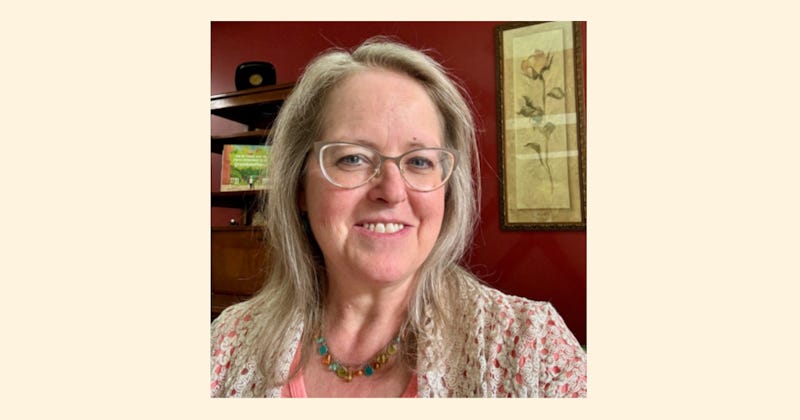

On June 15, 2026, I (Heidi Burgess) talked to Debilyn Molineaux, who describes herself as a "civic entrepreneur, strategist, and storyteller dedicated to advancing a thriving, just, and healthy democratic republic in the United States." For more than 20 years, Debilyn has helped build and strengthen the democracy ecosystem by launching, leading, and advising organizations such as LivingRoom Conversations and the Bridge Alliance— organizations that work to expand civic participation, bridge divides, and support long-term democratic renewal. She now leads an organization she created call JEDI Futures (formerly American Future) that aims to help people envision better lives for themselves--and their communities. She explains why she is doing this, and how she hopes it will help strengthen democracy here in the United States and beyond.
I started my conversation with Debilyn by asking her to tell me her how she got into the field and how her career has changed since she began working on democracy-related efforts in 2003. She explained that she started out briefly working in politics, and soon met a number of people who called themselves “transpartisans” — a label and work she found appealing.
We were hosting leadership retreats where Grover Norquist would sit down and talk to Joan Blades from MoveOn—so Grover from Americans for Tax Reform, very libertarian, conservative-ish, and Joan from MoveOn, very progressive. We were helping these leaders have very meaningful conversations and understand each other better.
After a few years of doing that, Joan called her and said:
Hey, I have this idea—what if people could do something in their living rooms and have a conversation that leads somewhere and helps them understand each other better?” Her concern at the time was, why don’t people believe in climate change? She just could not understand it. This was 2010. And out of that bloomed Living Room Conversations.
Then, fast forward a few years, we decided that conversing was not enough. We actually needed a coalition, because there were so many people who were not only doing dialogue work, but there was structural reform work that needed to be added, and there was policymaking and think tanks that needed to be engaged, and then media came along.
So the Bridge Alliance was actually trying to help people who were ensconced in their silos—civic engagement, or structural reform, or policy writing, or media—connect with each other for the sake of a better democracy. So the bridge was across the silos, not between the people.
So, Debilyn explained, throughout her career, she has seen a need for something, helped develop it, led some of these efforts for awhile and then she move on to something else that needed doing. So, after she’d led The Bridge Alliance for awhile, she saw that the field was doing a lot of “mental, system-thinking work,” but it wasn’t “helping people understand how democracy impacted their everyday life.”
For Joe Smith in the Midwest, or for somebody in the Northeast or in Arizona, democracy is so assumed in our culture that we don’t understand its impact in our day-to-day life. And therefore, we also can’t imagine what our life would be like if we didn’t have it, or if we had a better system, a healthy political system. So this idea of having a personal stake in democracy is where it [JEDI Futures] came from.
Initially it was [called] American Futures, and then I realized it really shouldn’t just be limited to the United States, so I shifted over to JEDI Futures. JEDI is an acronym for justice, equity, dignity, and inclusion. It’s a free tool online. Anybody can start imagining their future and then share it with their friends and family and neighbors, and start building out the future vision of what we all want to live into. And that will, in turn, help us build a better democracy.
I asked whether her tool helped people develop a personal vision about what people want to do with their own lives, or does it focus on community or the nation? Debilyn explained that it focuses on what people what to do with their own personal lives. If you ask what people want their community to be like, she explained, they tend to point out how they want other people to change. She wants people to envision what they want for themselves, and then notice how that intersects with what other people want for themselves — which then can lead to what people can build together.
People can fill out the questionnaire online, or they can download it and do it offline — either alone or together with others. When people fill out the questionnaire online, Debilyn gets a copy of their answers, which she keeps in a private database. From that she has aggregated the answers to observe “what we all want.”
She noted that there are “three and a half things” that we all want.
In every interview I’ve ever conducted*, people want to have a deep connection with the people in their lives, so they feel like they belong. They want to have a community around them that supports them being themselves and accepts them for who they are. And they want to contribute back to others and to their community. I call it the 3 Cs to make it easy to remember: deep connection, a community of belonging, and a way to contribute back.
And the half: the half is about their relationship with nature, because not everybody mentions nature. But people who do mention nature want to have access to green things, a way to interact with a park, a hiking trail. They want to live on a farm. There’s something about nature that about half the people mention in their future.
When people do it [the questionnaire] offline, they can do it with others and compare answers. This has the potential of leading more quickly to interpersonal understandings and sometimes collaborative action to help a set of people achieve their goals. Once you’re visioning your own life—what you’re proud of, how you’re going to feel, how you spend your time—these are really important questions to build out what you want for your own future life.
[Then] I do what I call the “me to we” flip in the questions. I ask people, “Okay, so we’ve built out this beautiful vision. What is the community that supports you in that?” And this is why I love it when people fill out the online visioning tool and share their information with me. But even better is when they download the PDF and do it with people in their life. Because then, especially if they interview each other, or do the visioning tool together, they start to build community just by using the tool.
I noted that I was surprised with Debilyn’s 3Cs because I expected people to talk about fundamental human needs as first postulated by John Burton and other human needs theorists. Their notion (drawn from Maslow) is that all humans have fundamental needs and when those are not met, people will fight to get them met. Although these needs include fundamentals like food and shelter, Burton and human needs theorists in the conflict resolution and peacebuilding fields focused particularly on identity, security, and recognition. I expected people to focus more on those kinds of things -- feeling safe, and secure in who they were, particularly.
Debilyn explained that the answers actually did correspond to that, at least to some extent:
I’m trained as a life coach, and the visioning tool is actually a coaching interview. The way the questions are framed is, “Okay, how many years do we want to go into the future?” We’d go 5, 10, 20 years into the future. And I’d say, “Okay, we’re going to go and observe your older self.” So I’m setting up their imagination. The first question is, “Okay, we have arrived on the platform. Where are we? Describe your surroundings.” And then, “As you’re observing your older self, what are you most proud of?” So I’m already putting them in a mind-frame where they’ve already done what they wanted to do, and they’ve got what they want. All of those survival needs are already met. Asking those survival questions would imply that they don’t have it, and therefore they want it. So I started from a different place. But I find it interesting that I could almost match up the community of belonging, the deep connections, and the contribution with identity, security, and recognition. I certainly see the sense of belonging linking up [to those ideas].
I also noted that I was impressed that all people said that they want to contribute back to others and their communities. Scholars have long pointed out that the U.S. is highly individualistic, with people being more concerned about their own well-being than with the well-being of their communities or society, which is more common in what scholars call “communitarian cultures.” This seems even more true now, with the epidemic of loneliness, lack of perceived agency, and apparent increasing prevalence of narcissism.
But Debilyn’s finding that all of her respondents said that they want to contribute back to others and to their community contradicts that notion. After the interview, Guy pointed out that Debilyn’s findings were consistent with our observations that most of our students seemed to want to find a way to “make a difference.” So that makes the notion of “courageous citizens,“ which we have been exploring a lot lately, more feasible.
We went on to discuss several of Debilyn’s blog posts that she had in her Substack over the last several months. One I particularly liked was entitled “Bridging Is Not Sufficient to the Task of Fighting Authoritarianism.“ I explained that it related to the long-running series of posts we’ve put on our Substack on whether or not bridging is “fiddling while Rome burns.” (This series, so far, has included seven posts, all of which are linked to the last one.) So, I asked Debilyn, where did she weigh in -- is bridging just “fiddling while Rome burns?” She said, yes, it is.
That is my assessment today, June 15th, 2026. Because getting along with our neighbors—understanding our neighbors and their motivations—doesn’t change our behavior enough to fight authoritarianism. What we need to protect democracy in the United States is to act like the citizens our country needs us to be. And that goes beyond bridging.
One of the things that I found in the bridging community, when I was a deep part of it and a leader in it, was that so many of the people who are doing bridging are doing it because they’re trying to avoid conflict. And as we are seeing our system of democracy fail, our institutions fail, we have to address the conflict in order to set up the new structure—because we’re all going to want different things. How we argue and debate and decide what is next is going to be conflictual. And I would rather have straight-up conflict that’s honest and in good faith than a “let’s smooth it over and keep the waters calm” effort. Not everyone in my bridging community is like that, but there are some people who are conflict avoiders, and they’re not helpful right now.
I noted that I have long thought that some mediators went into the profession because they didn’t like conflict, and wanted to “fix it.” Scholars, on the other hand, I noted, mostly believe that conflict is a normal and essential social process —but it can be done more or less constructively. Guy has long referred to conflict as “the engine of social learning.” So if you get rid of conflict, you are also getting rid of social learning.
So then I asked if Debilyn thought bridging was destructive, or just not helpful?
It is, of course, not destructive. I think it needs to be thought of, though, as a skill set, or a tool that we use to keep our relationships alive—so that, as we’re having conflict, they’re strong enough to survive.
Because the other reason that bridging is insufficient right now is that there’s a group of people out there that I call “conflict profiteers.” I didn’t like Amanda Ripley calling them “entrepreneurs,” because I’m an entrepreneur. So I wanted to put some negative connotation on it—actually, a friend suggested it. These conflict profiteers have figured out how to hijack our neural pathways and put us in survival mode—fear and anger—and live there. When that happens, we don’t have access to our prefrontal cortex to do the critical thinking to get out of it. And bridging requires a prefrontal cortex. So the bridging community is at a complete disadvantage already. And then you provide profit incentives for these people who sow division for the sake of sowing division, and they make money off of it. So we have all these perverse incentives that keep that going. That’s the other reason that bridging is hard right now, and insufficient.
We also talked about the fact that if attitudes about “the other” change through dialogues, the change usually doesn’t last more than a week or two. And it doesn’t translate into changed behavior or changed voting patterns or changed government. So it doesn’t help democracy.
So, I asked, what do we do instead?
This is where I go back to the personal visioning tool. Figure out what you want to build. Figure out what your neighbor wants to build. Figure out what your cousin, or your Uncle Bob, wants to build. And you build stuff together. The bridging skills come in really handy, because while you’re building stuff together, the relational skills are going to be helpful for handling any conflict that comes up. But building things together, to me, is the answer. We need to build things together.
I wondered again how building things together locally will defeat authoritarianism, because authoritarianism is, by definition, top down, not bottom up. “It’s tough”, Debilyn said, but the primary approach is through “grassroots efforts that swell up.” That’s where JEDI Futures is placed and where the personal visioning tool is placed. It is trying to help people envision what a better life for themselves would be like, and how that would link to others’ images of a better life to form a goal for a better community.
There are a lot of folks who are working at the ground level to swell up. There are other groups of people who are working to do top-down, policy-level stuff. The challenge here is that Project 2025 was a top-down initiative. We are all living through the implementation right now of Project 2025. We don’t have enough there there,** in my opinion, to have an antidote for Project 2025. There’s not enough money or time to put together a 50-year plan like the Heritage Foundation did. So if it can’t come from the top down, because we don’t have the resources to do that, then it has to come bottom-up. ...
Until we, the people, know what we want and act like the citizens our country deserves, and then we demand that from the government [then authoritarians will still have the upper hand]. The authoritarians have the advantage right now because they’re in power. They have too much power. And it’s corrupt power. They’re trying to rig all of the systems to hold on to power forever.
We talked about how to counter that. Beyond visioning, Debilyn thinks that the best answer is structural change. We agreed, however, that structural change [such as ranked choice voting and open (non-partisan) primaries] are difficult because the two primary parties are dead set against it, and are working to block it in what ever ways they can. Another problem with it, Debilyn said, was
Structural reform is one of those things that’s too wonky. People don’t understand how it impacts their day-to-day lives. They know there’s a primary, and they’re like, “Hey, if I have time, I’ll go vote.” Whereas actually that’s more important, the way everything’s gerrymandered these days. We need something that people connect to their own life, to make sense for them to take action on.
She sees JEDI Futures as providing that.
We talked about many other things as well: the problem of corruption, and how that is helping authoritarians; and about silos that prevent 1/2 of America from seeing or understanding what is really going on). We talked about who should be “in” our new coalitions and who should be “out.” And we talked about how much had changed since we both grew up in the Cold War era. These and other topics are covered in more detail in the full interview.
————————
* Debilyn did interviews using her visioning questionnaire before she put it online. That’s why she uses the term “interview” here. She talks more about the pilot findings in this video.
**This is a reference to a joke that was popular in the 1960s about Oakland, California: “The trouble with Oakland is that when you get there, there isn’t any there there.”
Please Contribute Your Ideas To This Discussion!
In order to prevent bots, spammers, and other malicious content, we are asking contributors to send their contributions to us directly. If your idea is short, with simple formatting, you can put it directly in the contact box. However, the contact form does not allow attachments. So if you are contributing a longer article, with formatting beyond simple paragraphs, just send us a note using the contact box, and we'll respond via an email to which you can reply with your attachment. This is a bit of a hassle, we know, but it has kept our site (and our inbox) clean. And if you are wondering, we do publish essays that disagree with or are critical of us. We want a robust exchange of views.
About the MBI Newsletters
Two or three times a week, Guy and Heidi Burgess, the BI Directors, share some of our thoughts on political hyper-polarization and related topics. We also share essays from our colleagues and other contributors, and every week or so, we devote one newsletter to annotated links to outside readings that we found particularly useful relating to U.S. hyper-polarization, threats to peace (and actual violence) in other countries, and related topics of interest. Each Newsletter is posted on BI, and sent out by email through Substack to subscribers. You can sign up to receive your copy here and find the latest newsletter here or on our BI Newsletter page, which also provides access to all the past newsletters, going back to 2017.
NOTE! If you signed up for this Newsletter and don't see it in your inbox, it might be going to one of your other emails folder (such as promotions, social, or spam). Check there or search for beyondintractability@substack.com and if you still can't find it, first go to our Substack help page, and if that doesn't help, please contact us.
If you like what you read here, please ....